Polly Pocket: from render passes to the final image
Notes on the Polly Pocket compositing workflow, combining render passes and using Kitsu for version review and feedback.
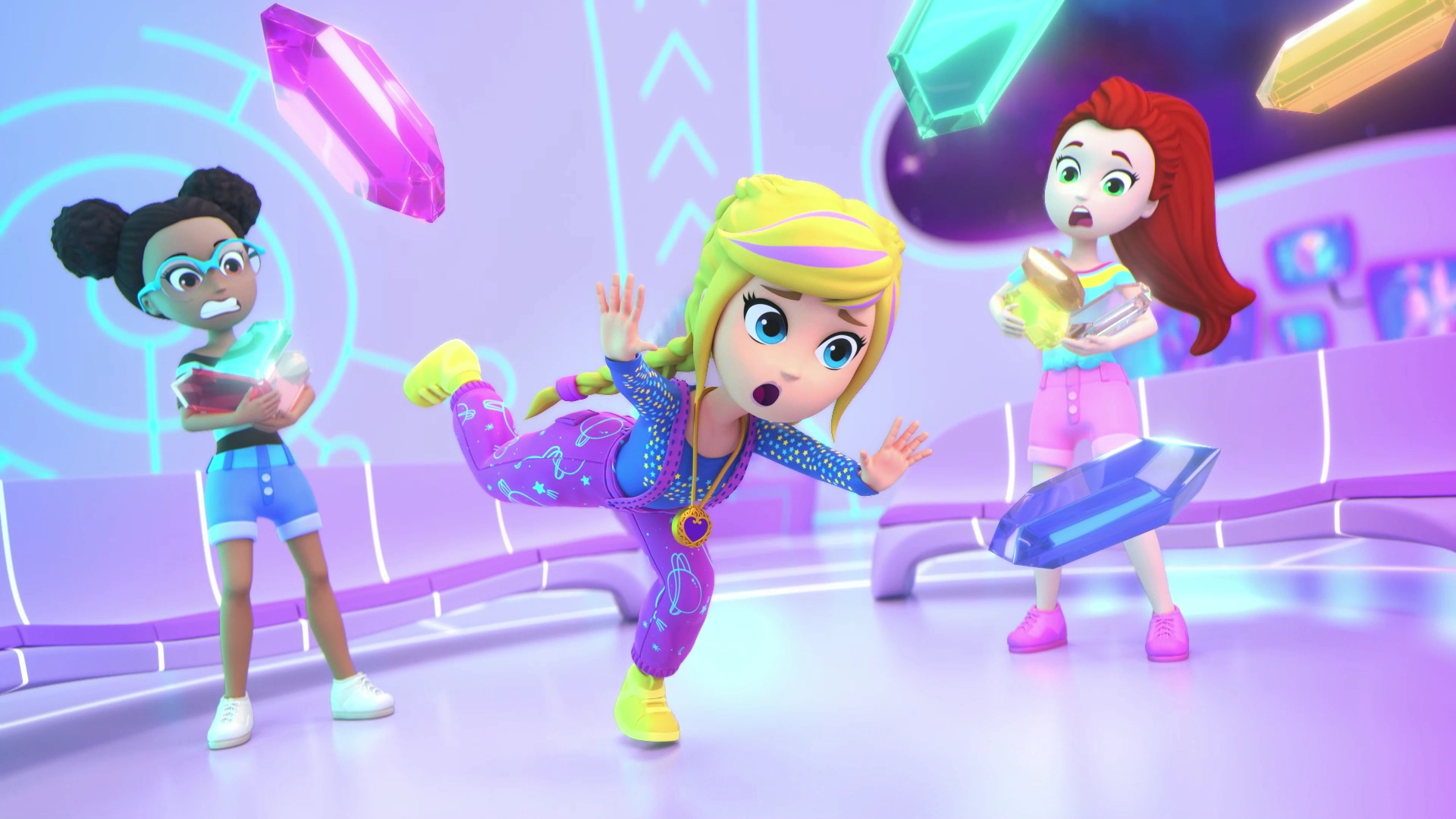
An animated image is the result of several connected stages. On the 2023 Polly Pocket web series for Mattel, my role was compositing artist. Two parts of the documented workflow show how the production moved toward the final look: separate render passes and a shared process for reviewing versions.
Working with render passes
The lighting team rendered character, background, emission, shadow, and volumetric passes. These were used during compositing to achieve the final look.
Looking at this list gives a useful way to read the finished image. Characters and backgrounds establish the scene, while light, shadow, and atmosphere contribute to its appearance. The project’s compositing work brings those rendered elements together.
Keeping versions and feedback connected
The production used Kitsu by CGWire, a web-based project management tool for animation. The team used it to view progress, upload new versions, and send feedback.
That review workflow sits alongside the image-making work. A new version is something the team can assess and discuss, connecting individual contributions to the ongoing production.
Looking at the work
The Polly Pocket project page includes the video, selected stills, and making-of images. Together, they offer an introduction to the visual result and the work behind it.
Compositing is one part of my broader practice across film and technology. Monarch is another project in the portfolio, with a VFX artist credit, while Hopeless Mind connects film direction and production design with virtual production.